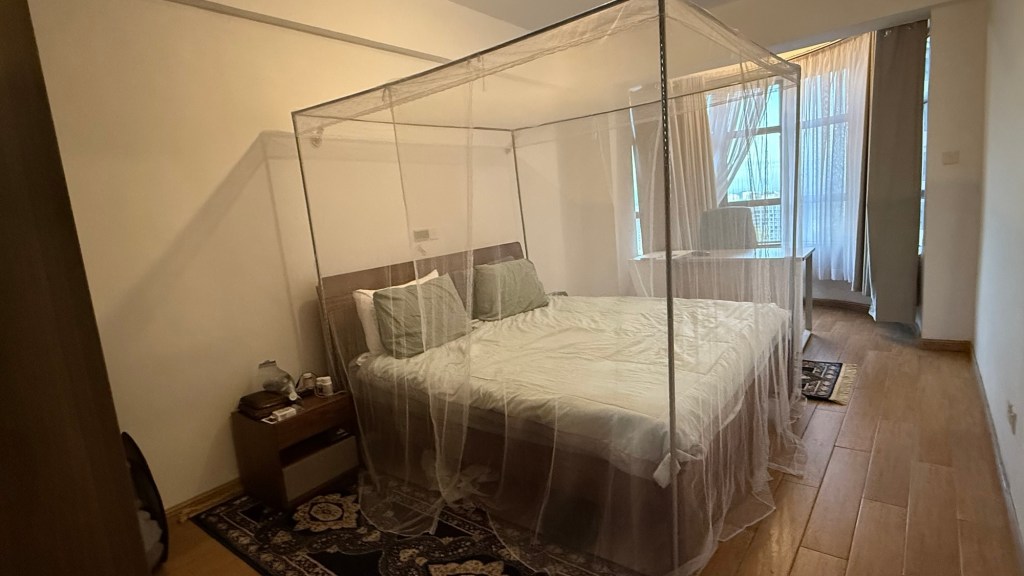
On our first day in Kenya, once we had some sleep, and we’re talking a major coma-like sleep—we had a chance to take a better look at our accommodations. We live in the Upper Hill area of Nairobi, in the Farahi Hill Apartments. Our place is a nicely furnished, roomy, 2 bedroom, 2 bathroom abode on the 9th floor of one of two 12 story towers. Our kitchen was nicely stocked with a couple of delicious shwarma dinners from a fast food joint called Big Knife (what does that mean?), some eggs, juice, milk, breakfast cereal, a variety of spices and condiments, fresh pineapple and mangos, and a few other items. We brought with us a couple of sharp knives, our favourite veggie dicer, and some other utensils, but the kitchen is actually pretty nicely equipped. It even has a stand mixer and an Instapot knock off. Needless to say, we are quite happy with what we have to work with here.

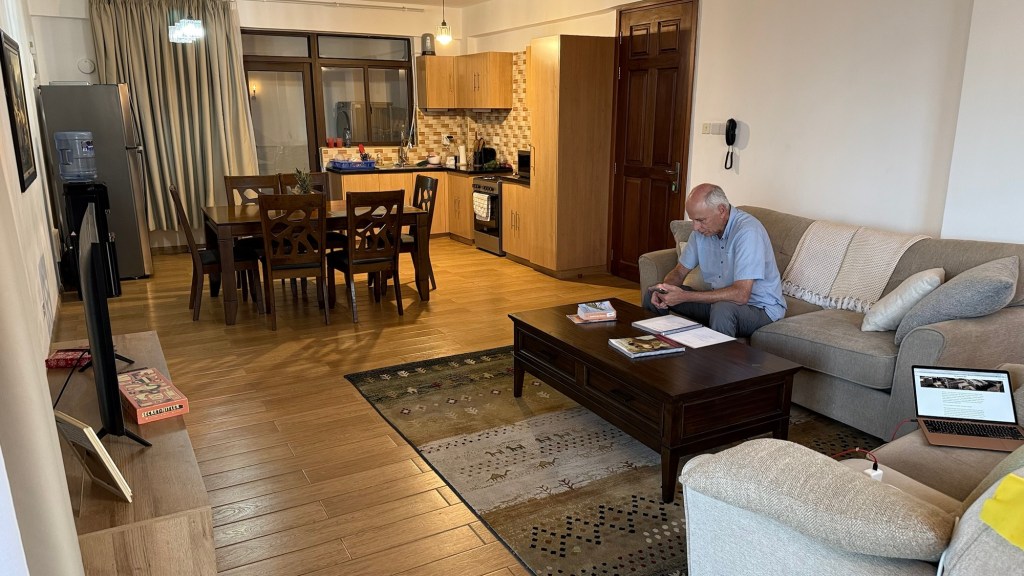
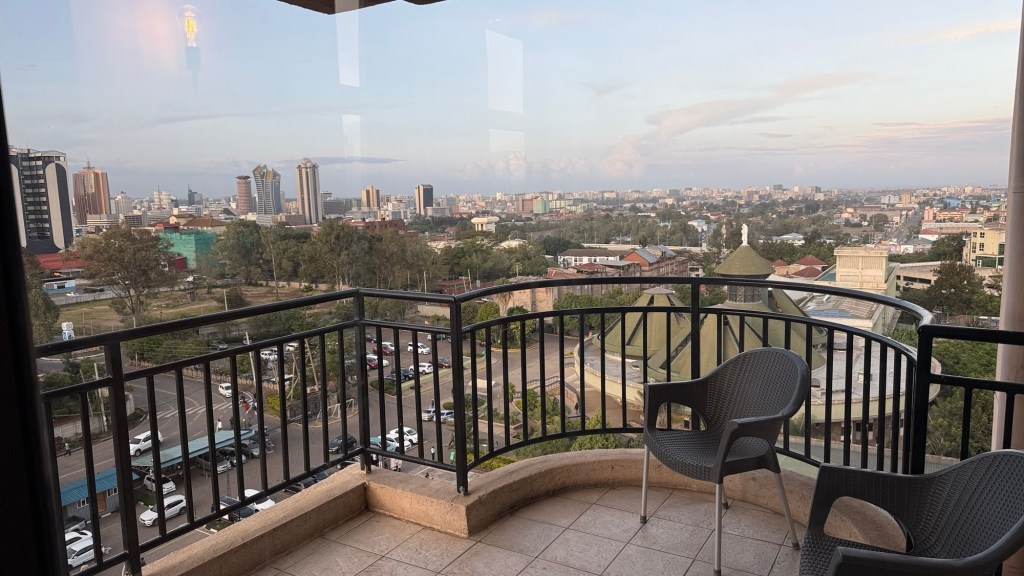
On Saturday, the Stowells, our fellow office couple until early May, drove us to the local Carrefour grocery store so we could pick up groceries for next week. They knew we would need their help navigating through the store and its various product offerings that are mostly completely different from what we’re used to in the US. En route to the store, we passed the mission office and local ward building we will be attending. It is about .6 of a mile from our apartment. Sadly, once we got out of our neighborhood, the traffic turned horrendous.
The Traffic
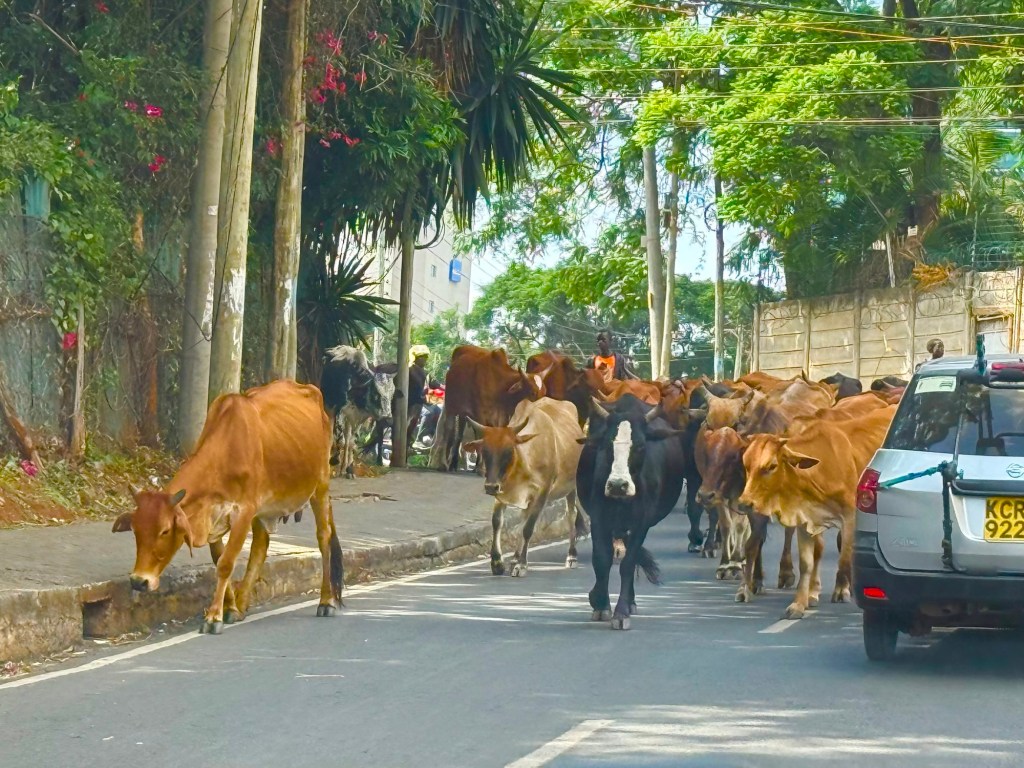
There is a traffic circle that links our apartment and workplace with a good part of the city, and the traffic at that intersection is CRAZY!!! There are so many cars making their way around what should be 2-3 lanes of cars, that the circle ends up with 5 lanes of cars—all of them crossing lanes to turn into and out of the round about. Any little gap between cars is filled in with swarms of boda bodas, which are dirt bike like motorcycles used for delivery of groceries, people and other things. It’s an accident waiting to happen.
And did I mention that they drive on the left side of the road here? Yes, this is a former British territory, so they still sit on the right side of the vehicle and drive on the left side of the road, here. We have not yet checked all the blocks on all the local driving requirements to be able to drive the Isuzu truck that is parked in our parking space, but we are almost relieved that we don’t have to face the music and deal with the left side of the road driving in such horrible traffic.
Church
Sunday we went to church and were pleased to find that the people in the Ward here speak up when they talk, so we can actually hear what is being said. When we were in Kenya, earlier this year, we could barely hear most of what was said in church and second hour classes, because most everyone spoke with such quiet voices. I thought I was losing my hearing, but alas, I wasn’t. We and several young missionaries who are new to the area were called on to bear our testimonies, and over the course of our meetings, we met and talked to quite a few Ward members.
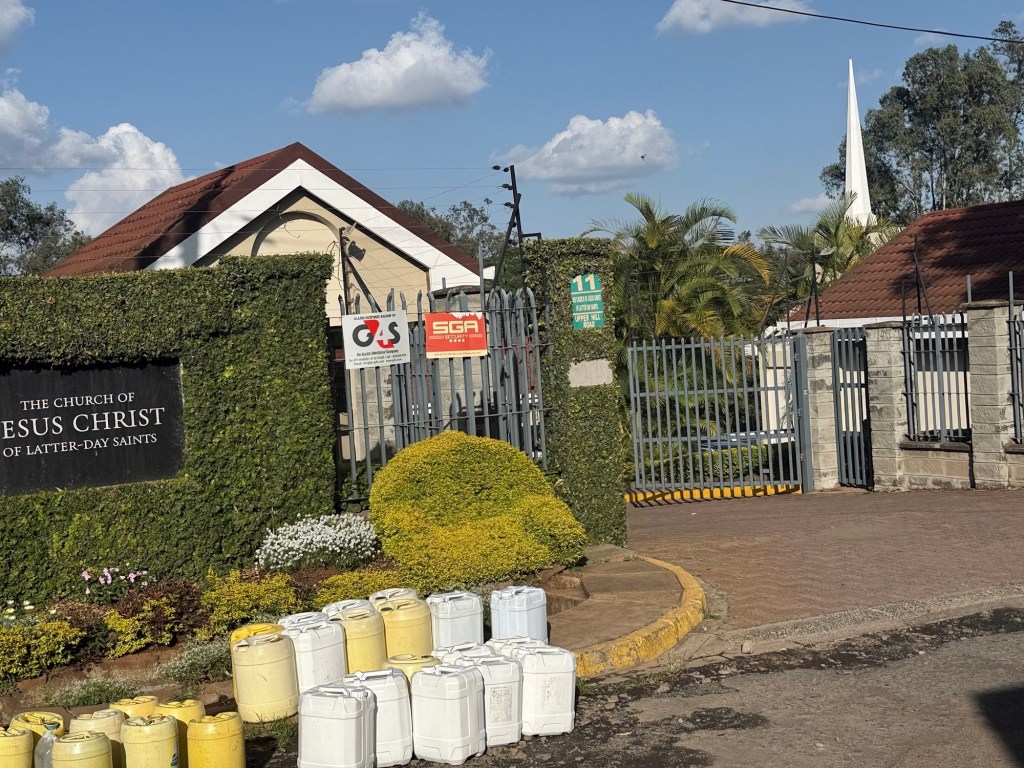
The Upper Hill Chapel, mission office, institute and some area office personnel are all located inside this gated, 24-hour guarded compound. The church put a water spiggot outside the property that the public can use to get water for free for their personal use and for business purposes like this one. Workers fill these containers, load them on a hand cart that carrys about 15 of them, and push them up the hill to sell water to people with no running water.
In January and February, we lived in a neighborhood that was close to the Kibera slum, so there were a lot of very poor people at church. This time around, we’re in a more prosperous area, and the ward is a lot different. For one thing, there are very few children at church. Why? Because most of the families send their children to boarding schools. How much does that cost and how do they afford it? We don’t know—yet, but apparently, that is what you have to do here, if you want your children to get a good education.
Monday was our first day in the office, where I am assisting Sister Stowell, the office secretary, and James is assisting Brother Stowell, the finance person, as well as taking care of missionary housing. Well actually, there are 2 full time church employees whose full time jobs are managing the vehicles and housing, but they are not up to speed on technology and how to do their jobs, so James and I will still have to do quite a bit of that work. The Stowells leave May 1st, and unless we can find someone to take their place, once they go, we are going to be doing the work of 4 people.
Our Mission Leaders: President & Sister Onekawa
Around 11 AM, Monday, our Mission Leader and his wife popped in to meet us. They are a delightful New Zealand couple, who I’ve been told perform vocal music together. We were impressed with how calm, humble and kind they are, especially as we learned about the scope of what they manage. Holy Cow!!!
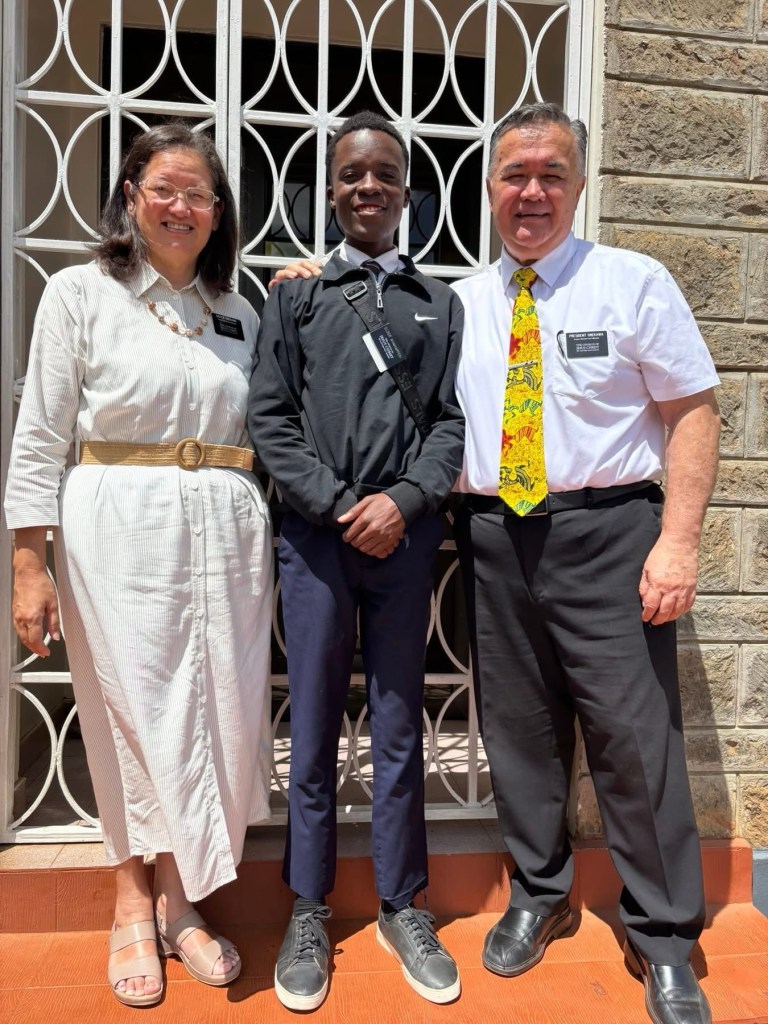
For starters, they lead 180 missionaries, the majority of them (about 130) from various countries and tribes in Africa. Then there are about 35 Westerners from Australia, New Zealand, Canada and the US and 10 Sister missionaries from the Pacific Islands (Tonga, Fiji, etc.) It’s a very diverse group. A good part of the missionaries from Africa have only been members of the Church for 1-3 years, so they are relatively new to the gospel and doctrines they are teaching as well as the standards they are expected to live by. Some of them are orphans; some have lived on the street or in a slum most of they life. For a lot of them, this mission is the opportunity of a lifetime to rise above starvation, homelessness, and other difficult circumstances and have a chance at a better future. How does a leader who is accustomed to living a 1st world life in a 1st world country assimilate to leading such a diverse group of young people?
The second complication for the Mission Leader is his responsibility as the ecclesiastical leader over the 3 districts and 6 branches in our mission, which are spread across a distance of over 350 miles. He is the Stake President equivalent over all of them, so he is responsible to: call, set apart, train and guide all the leaders; be the final interview and approving authority for young men and women who want to go on missions; conduct interviews and approve all temple recommends, and more, all without personally knowing most of the church members he is working with. He relies on inspiration for all of this, because it is otherwise not humanly possible. Can you imagine how much time and energy all of that takes?
Our hearts go out to President Onekawa and his wife! If there is anything we can do to lighten their load, we are here for them! Say the word, and and we will do what we can!
Our Living Conditions

Living conditions for us missionaries vary, depending on where we are located. A good part of Africa is at sea level, and when you are along the equator, as we are in Kenya, that means hot days year round and steamy hot days if you’re near a coast. The east coast of our mission is the Indian Ocean, so those who work around the port city of Mombasa are in that hot steamy zone.
Those of us who live in Nairobi have it really good, because the elevation here is about 5900 ft, and we are far from the coast. The weather is cool and mild with minimal humidity year round. We are on the equator, so the sun is very intense, but there is usually a breeze, and when you are in the shade, it is always cool. For Africa, it’s the good life! We live near a library, museums, malls and a great selection of grocery stores and shopping malls. This all sounds too good to be true, but there are downsides. I’ll tell you about them in my next post.
Christmas
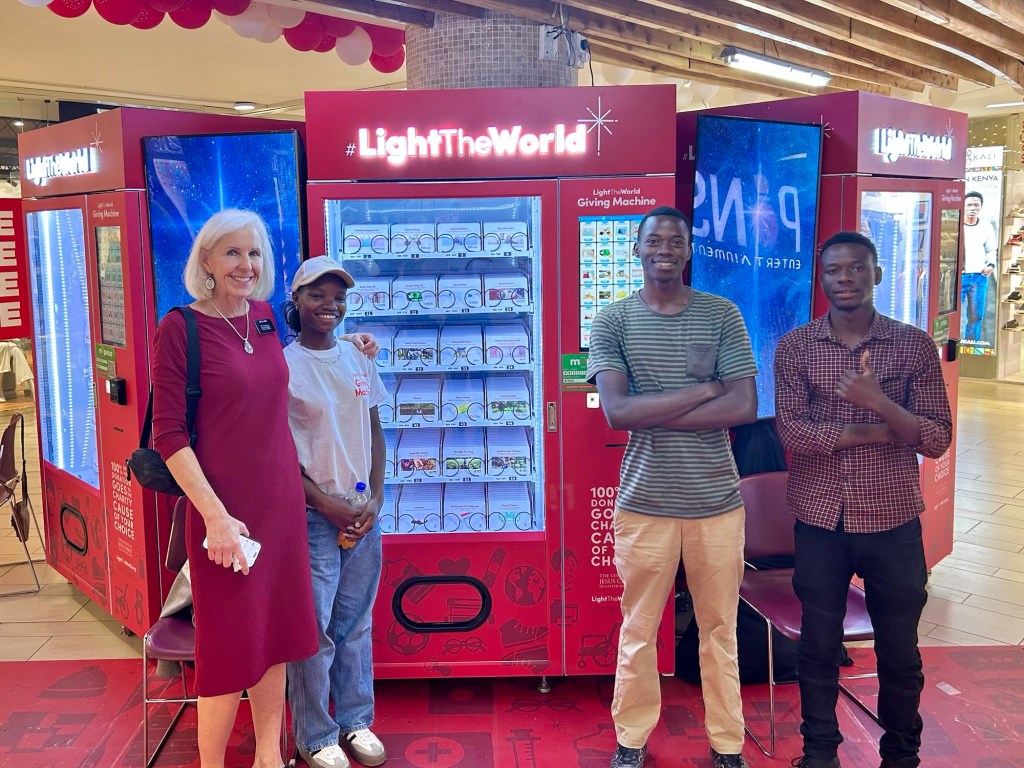
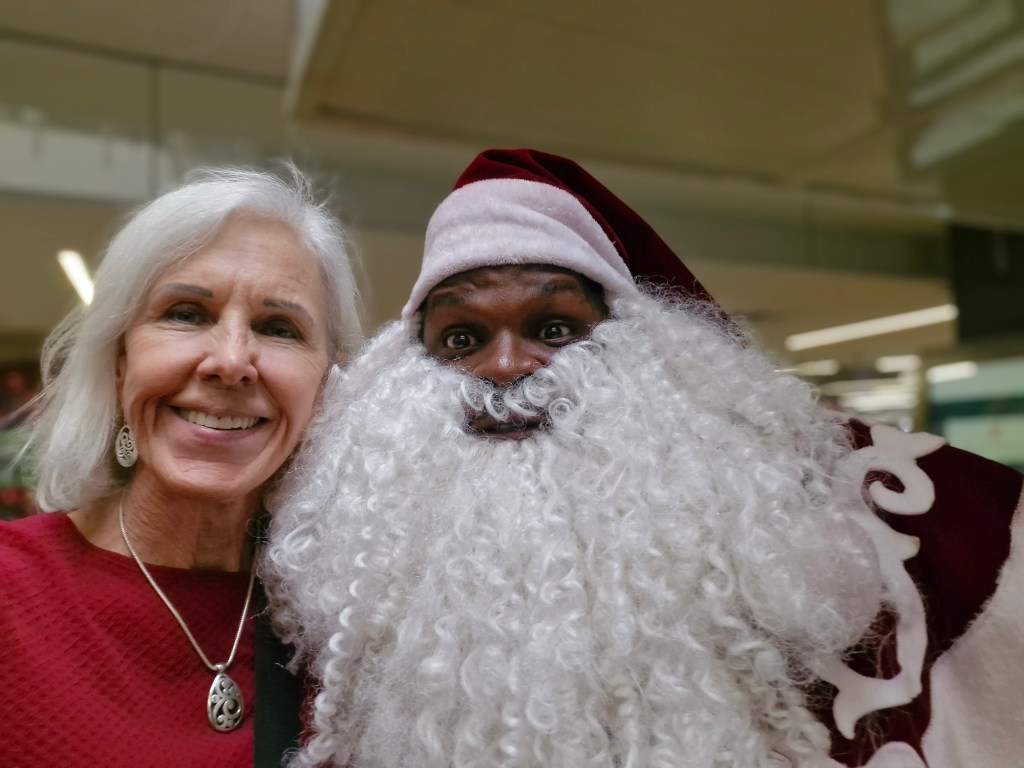
We took a little excursion to the Nairobi temple on one of our first Saturdays here, and on the way home went by a mall called the Sarit Center to check out the Church’s Giving Machine. I got a photo with Santa and hope he listened to my Christmas wish list.
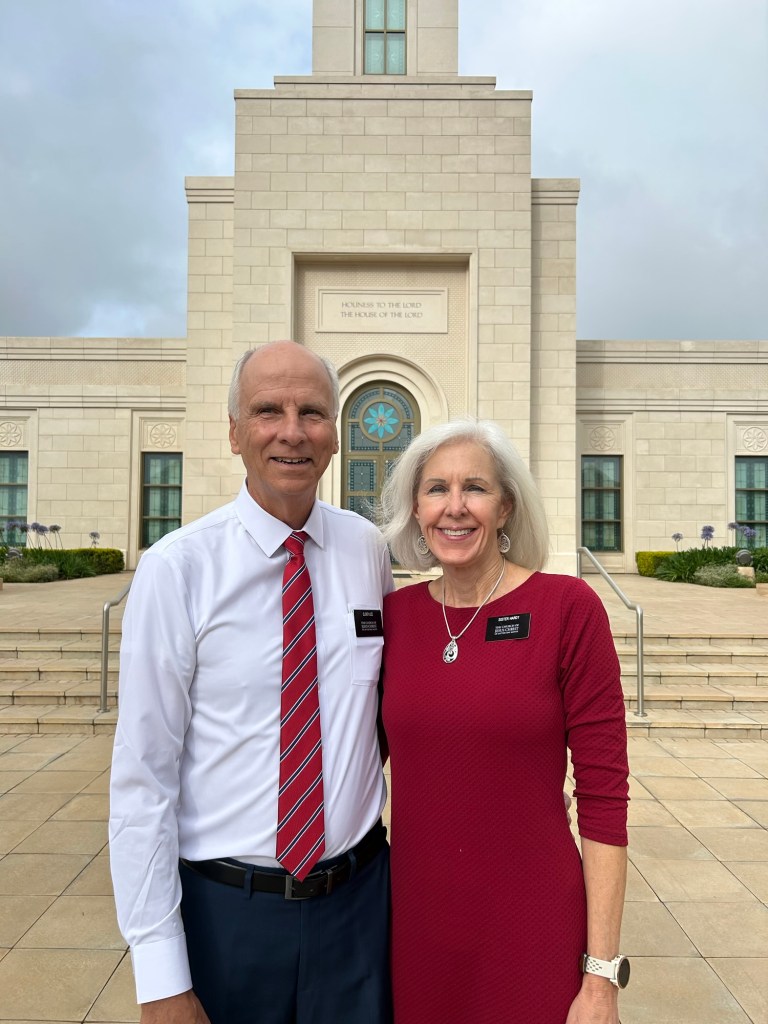
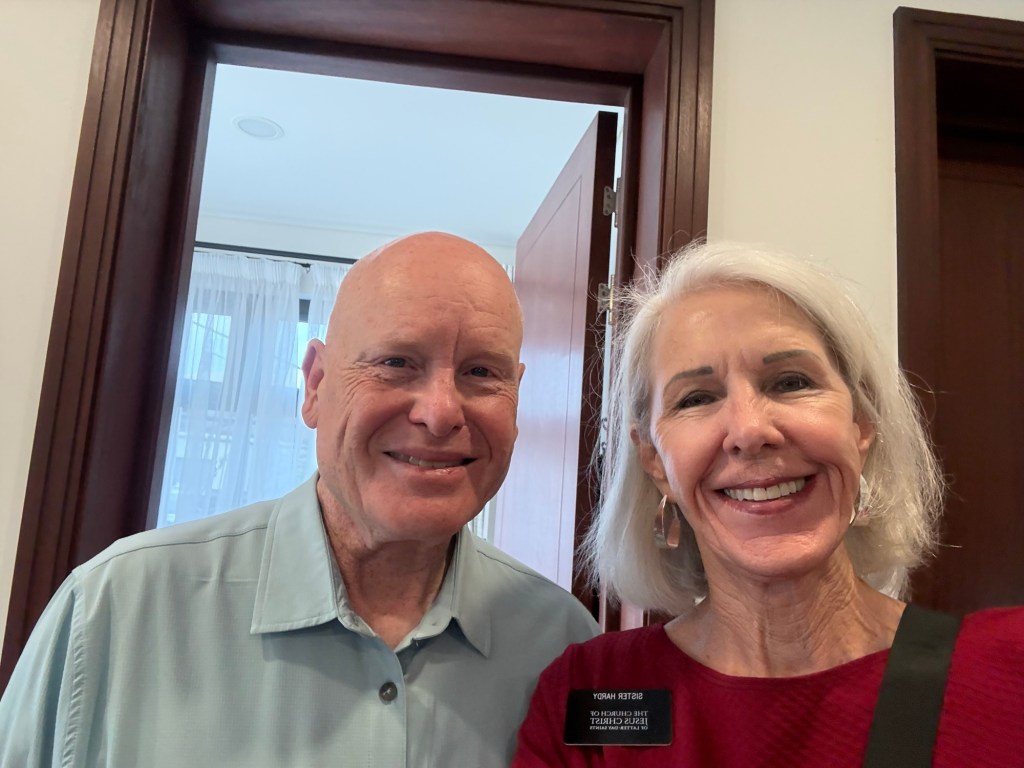
On Christmas Eve, we went to a Christmas Party for the senior couples in the Central African Area Office and both the Kenya Nairobi East and West Missions. It was nice to meet some other folks from the US and share our perspectives on life and the Church in Africa. There was a gift exchange, for which I made granola and wrapped it in Christmas tea towels I brought from the US, in case we had to participate in a gift exchange. We scored a big package of beef jerky that someone brought from the US, a large Cadbury chocolate bar and some cookies, in the gift exchange. Bam!
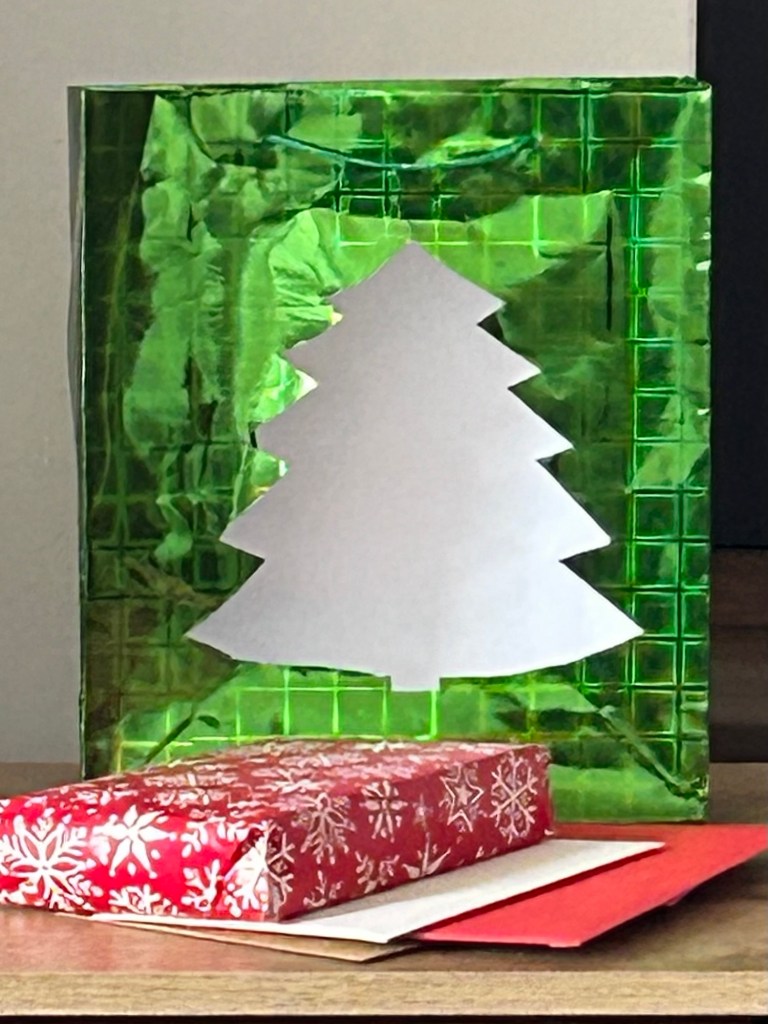
On Christmas Day, we made ourselves a Christmas tree and opened our 2 cards and 2 gifts together.
Our Christmas Day activity was meetings up with all but 2 of the senior missionaries from our mission and our Mission Leaders for a going away lunch for 2 of the couples who are leaving soon. Once they are gone, there will be just 10 senior missionaries in our mission—4 in Nairobi and 6 in the distant corners of the mission. The couple who are training us in the office are scheduled to go home in early May, and no replacements are in the works for any of the 6 positions that will then be open, as there is such a huge shortage of senior missionaries.
This is pretty boring stuff, isn’t it. Well welcome to our lives. We’re working in an office, just like I did in the US Army. It’s like groundhog day: keeping track of who goes where, how they get there, where they will be staying, how they will get money for food, clothes, electricity, water, transportation and more. Super fun stuff!
A Few Other Issues that Come to Mind:
1. Mosquitos. We came here with anti Malaria medication that we planned to only take when traveling to the lower elevations of our mission. On day one, when we first arrived, I got several mosquito bites while standing in my bathroom washing my face. WHAT THE HECK!!! That is NOT supposed to be happening in this cool climate! (I can’t really blame the mosquitos, because no matter where I am, they LOVE me THE MOST and choose me above all other possible food sources!) After my bites, we closed the place up tight and killed every mosquito we could find, and after a few days, we were slacking off on that mosquito net. Then we heard the story of one of our missionaries who contracted Dengue Fever from a mosquito bite. He is now fully recovered, but at one point, was deathly ill. Let’s just say—that is not going to happen to us. We are back under that bug net every night and standing guard to kill any mosquitos who dare to rear their ugly little heads.
2. The water. I’ll just say up front that clean drinking water is something you should not take for granted. We all drink filtered water, here. There is currently a cholera problem in parts of the country, and it is possible that the cholera is being spread through the public water supply. Last week, we received guidance from the Area Office that starting this week, chlorine bleach will be added to baptismal fonts to ensure the water does not make those involved in baptisms sick. Wow!

3. Walking and riding a bike are dangerous. There is no room on any road for a bike to be ridden safely, and sidewalks, which may exist on one side of a road, but usually don’t, can be treacherous. They are usually made of 3’ by 20” slabs of concrete that might be 3” thick, laid side by side over concrete drainage ditches that are 2’ to 6’ deep. Often times, a slab will be missing or broken, so you have to pay attention to keep from falling through the sidewalk and landing in the creepy filth and trash below. I shouldn’t complain about the sidewalks, because without them, you are walking on the edge of the road, just hoping and praying that the cars and boda bodas see you and don’t run you over. As dangerous as walking is, I would still chose it over driving.
4. The convenient things we have at home—ready to eat spicey refried beans and cream of chicken soup in handy cans, tortilla chips, produce that is already washed and ready to use or that just needs to be rinsed—do not exist here. We have to sanitize all of our vegetables by soaking them for 15 minutes in a veggie wash solution, then rinse them in filtered water. We make our own refried beans and cream of chicken soup. I am studying up on how to make my own cheddar cheese, because cheese is so expensive. With all these complications, meal preparation takes SO MUCH TIME! We’ll survive, don’t get me wrong. It just makes me appreciate how simple and good our life in the US is.
There is so much more I could tell you about, but I don’t want to put you to sleep. I’m keeping a list and will include more in my next post.
Thank you to all of you who have offered us support and encouragement! We truly appreciate it! If you have questions, you can comment here, email me or send me a text message. All forms of communication that work in the US work here. Much love to anyone with the patience and interest to read this!…..Eileen

 Living Our Bucket List
Wow! What a new way of life you’re having to live this year. This will be an experience that you will never forget. Just keep being strong and you will get through all the changes.
I enjoyed reading your blog. I will look forward to reading the next one.
Dianne Craft
LikeLike
Thanks for the words of encouragement, Dianne! We have quite a bit of volunteer work planned for our future. This is just the beginning. There has to be more to life than just riding bikes from here to there, though that is really fun and rewarding too. There’s more of that in our future too!
LikeLike